If you've talked to anyone about buying near Cucamonga Station in the past year, you've probably heard some version of the same pitch: get in now, before America's first true high-speed rail line turns this corner of Rancho Cucamonga into the next transit boomtown. Brightline West is going to connect this stretch of the Inland Empire to Las Vegas in about two hours. A whole new district is being planned around it. The story practically writes itself.
Here's what the story leaves out. As of June 2026, the ZIP code that contains the station, 91730, is showing a momentum score of just 26 on a 0-to-100 scale where 50 marks the state average, according to PropertyIQ's hyperlocal tracking. Median value there sits near $678,000, up a flat 0.6 percent over the past year, and down 0.7 percent over just the last three months. That's not a market pricing in a future transit windfall. That's a market shrugging.
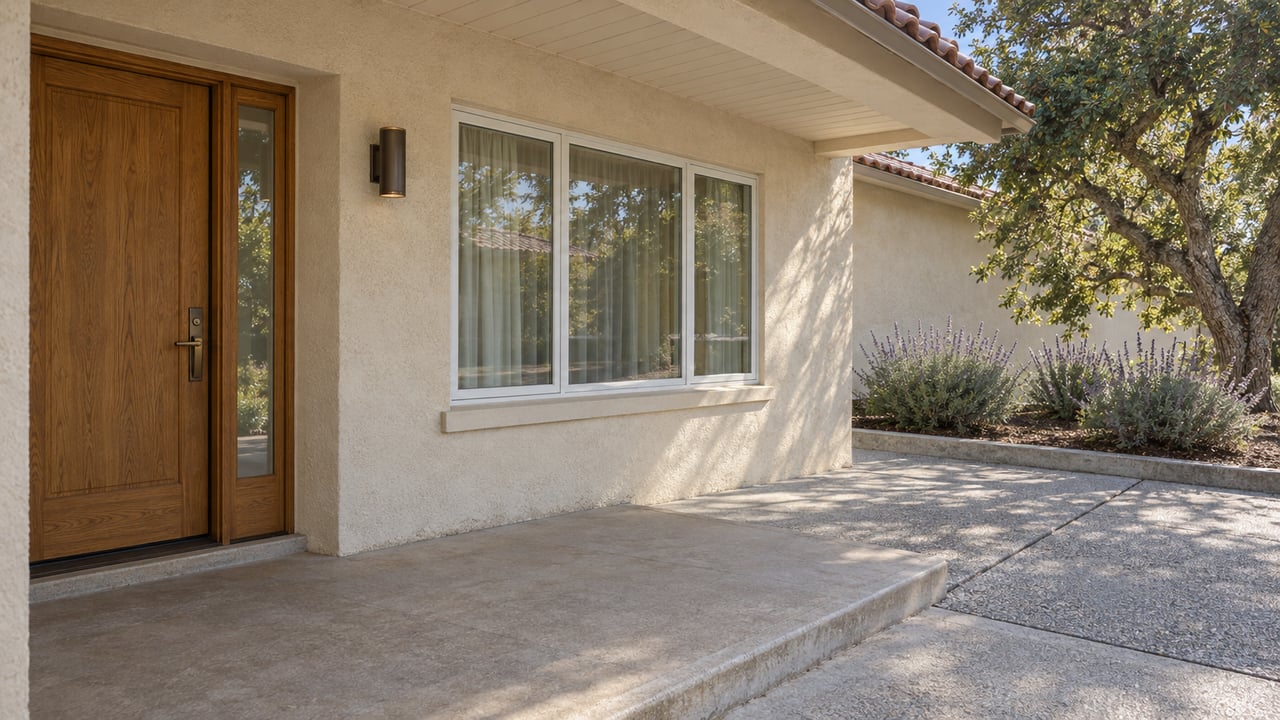
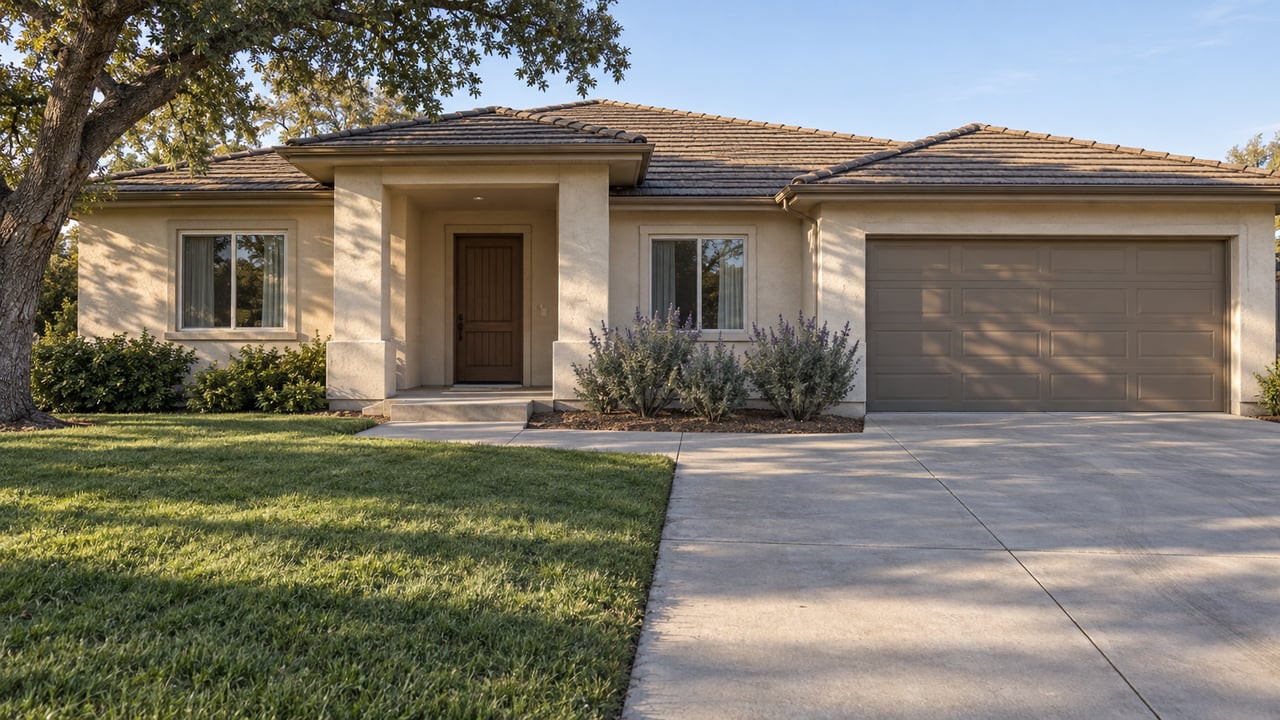
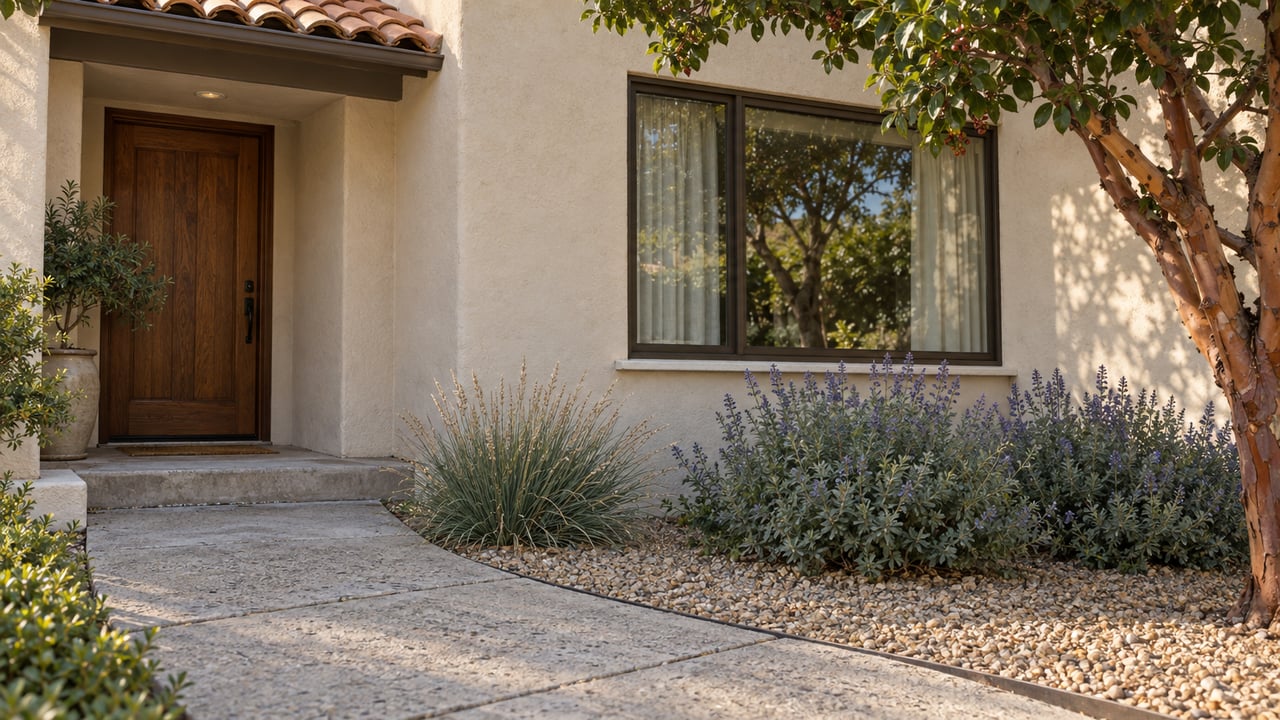
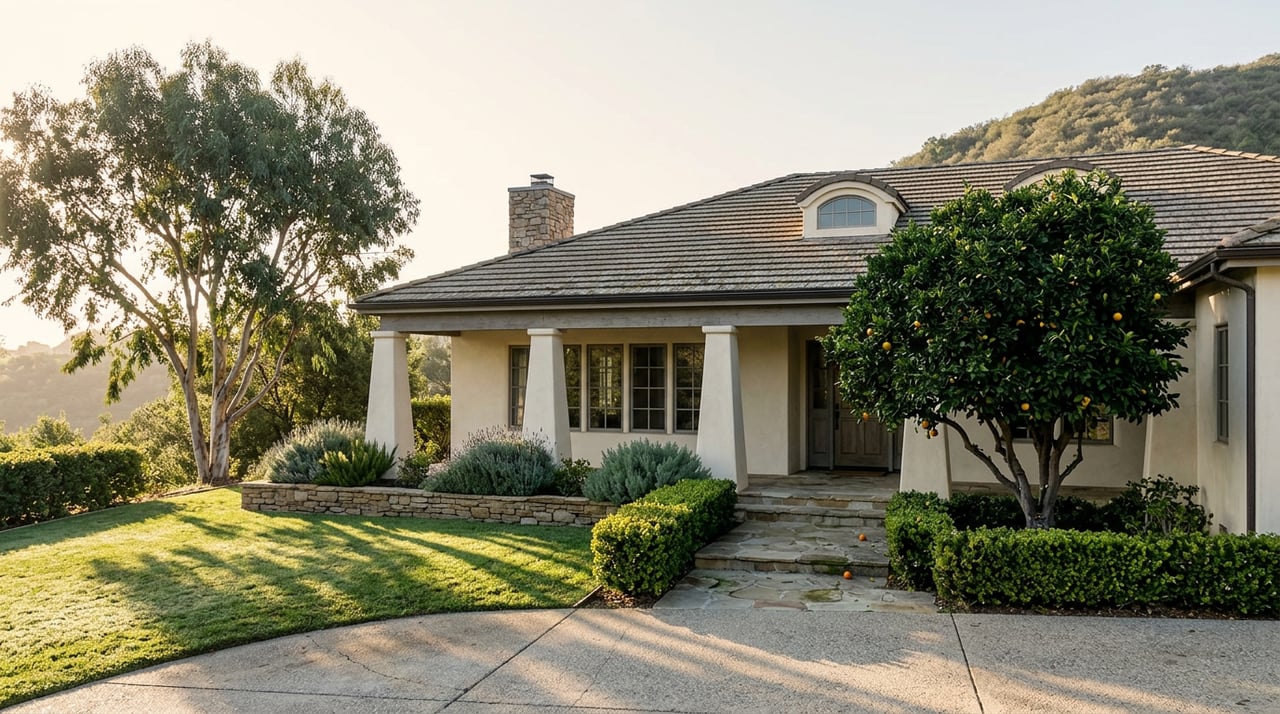
Meanwhile, the foothill neighborhoods with no rail connection at all are the ones commanding the real premiums. Zillow's own neighborhood data puts Deer Creek, a foothill community with larger lots and no proximity to any station, at close to $1.67 million typical value, more than double the citywide figure. The money isn't following the train. It's following the hillside.
For anyone comparing Inland Empire neighborhoods with a future transit hub somewhere on the list of reasons to buy, that gap is worth sitting with before you write an offer.
What's Actually Under Construction Right Now
Start with what's real and funded today, because it's more modest than the marketing suggests. Metrolink's Rancho Cucamonga Siding Extension Project is underway as part of the Southern California Optimized Rail Expansion, or SCORE, capital plan built to get the regional rail system ready ahead of the 2028 Olympics in Los Angeles. The work upgrades the at-grade crossings at Hellman Avenue and Archibald Avenue and extends the siding track so trains can pass each other in opposite directions, eventually supporting service every 30 minutes in each direction instead of the current schedule. It also lays the groundwork for federal Quiet Zone designation at those crossings, which the city would need to apply for separately once the safety work is finished.
That's genuinely useful infrastructure. It's also a signal upgrade to an existing commuter line, not a new high-speed terminal.
The station itself already does real work for the neighborhood around it. Rancho Cucamonga's Metrolink stop runs 32 San Bernardino Line trains on weekdays, 16 in each direction, between roughly 4:11 a.m. and 11:01 p.m., with lighter weekend service. Omnitrans' ONT Connect shuttle meets every train and runs nonstop to Ontario International Airport. If you value a car-optional commute into Los Angeles or an easy airport run, that's a present-tense amenity you can use this month, not a projection.
The Project That's Getting Bigger While the Calendar Slips
Brightline West is the piece doing the heavy lifting in every pitch about this area's future, so it's worth looking at closely.
The city's own planning documents describe the HART District, named for the three streets that bound it, Haven Avenue, Arrow Route, and Rochester Avenue, as the future home of a "true multi-modal transit center" combining the existing Metrolink stop, the Brightline West terminus, an underground link to Ontario International Airport, and the Omnitrans West Valley Connector, a 19-mile bus rapid transit line planned to run 21 stations between Pomona and Rancho Cucamonga. On paper, that's four separate transportation systems converging on one five-acre site.
On a calendar, it looks different. Brightline West broke ground in Nevada in April 2024 with a target of opening before the 2028 Olympics. By April 2025, that target had already slipped to September 2029. Updated financial disclosures in January 2026 put the project's total cost at roughly $21.5 billion, up from about $12 billion at groundbreaking. And in a detail that matters more than a cost overrun on its own, reporting in September 2025 noted that the federal government had clawed back more than $3 billion in funding previously committed to the project, a reversal that adds real political risk to a private infrastructure build that was already leaning on a mix of federal grants, private-activity bonds, and a pending multibillion-dollar federal loan to close its financing gap.
None of that means the project won't get built. It means the distance between "groundbreaking ceremony" and "trains running" on a project this size has already grown once, and the financing behind it is still being assembled in public view.
The Fight Next Door Shows How Contested This Money Really Is
Brightline West isn't the only rail project tangled up in funding uncertainty near Rancho Cucamonga, and the fight over a much smaller, nearby project is a useful window into how contested this money actually is.
The Foothill Gold Line, the light rail extension that has been creeping east from Los Angeles for years, was supposed to eventually reach Montclair, just west of Rancho Cucamonga. In September 2025, the San Bernardino County Transportation Authority pulled $37 million it had committed to that final Montclair segment, citing a lack of representation and oversight, and proposed redirecting the money toward a new Metrolink shuttle service connecting Pomona-North directly to the Rancho Cucamonga station instead. Montclair did not take that quietly.
| Date | What Happened |
|---|---|
| September 3, 2025 | SBCTA votes to divest $37 million earmarked for the Claremont–Montclair Gold Line segment, proposing to redirect it toward an enhanced Metrolink shuttle to Rancho Cucamonga |
| December 16, 2025 | The City of Montclair files a legal demand against SBCTA, alleging the funding pullback violates Measure I, the county's 2004 transportation sales tax |
| January 2026 | Brightline West's updated financial disclosures put total project cost near $21.5 billion, up from about $12 billion at its 2024 groundbreaking |
| February 2, 2026 | State Assemblyman John Harabedian introduces AB 1678, proposing a new state authority empowered to take over the Montclair right of way and finish the segment |
| April 1, 2026 | SBCTA's board votes unanimously to oppose AB 1678, citing legal and financial risk to the agency |
| May 27, 2026 | The Gold Line board awards the Pomona–Claremont construction contract to a joint venture of Skanska, Stacy and Witbeck, and Herzog, while the Montclair extension remains on indefinite hold |
That dispute is technically about a different city's rail segment. But it's the same regional transportation authority, the same pool of sales tax revenue, and the same pattern of committed funding getting pulled and reassigned when priorities shift. If a $37 million line item can trigger a legal fight and a state legislative response, it's reasonable to ask how much smoother a $21.5 billion, multi-agency, cross-state high-speed rail project is going to go.
Why the Discount Makes Economic Sense
None of this is a reason to write off the HART District. It's a reason to understand why the market hasn't already written it in.
A future amenity only shows up in today's price once buyers can be reasonably confident about when it arrives and what it will actually look like. Right now, anyone pricing a home near Cucamonga Station is being asked to underwrite a project whose completion date has already moved once, whose budget has grown by more than 75 percent since groundbreaking, and whose federal funding has partially reversed. That's not a reason to assume it fails. It is a reason the discount exists.
There's also a more immediate, less speculative cost working against any premium: construction. Geotechnical work, utility potholing, and grading along the I-15 corridor near the SR-210 interchange have been underway since 2025, and heavy construction activity is expected to intensify through the rest of this decade as the approach viaduct into Rancho Cucamonga takes shape. Years of active construction next to a property tend to suppress near-term desirability before they ever enhance it. Buyers who are pricing in tomorrow's transit hub without weighing today's construction zone are only doing half the math.
The foothill premium tells the other half of the story. Alta Loma and communities like it aren't commanding higher prices because of any transit connection. They're commanding higher prices because of larger lots, mature landscaping, and a settled, established character that has nothing to do with what gets built six miles south. That's not a coincidence. It's what buyers are actually willing to pay for today, as opposed to what they might be willing to pay for a decade from now if a very large, very complicated project lands on schedule.
What This Means If You're Weighing These Neighborhoods
If you're comparing a home near Cucamonga Station to one in the foothills, separate the two questions. What does this location offer you today, in terms of commute, airport access, and the improvements already funded and underway? And what are you being asked to pay, if anything, for a transformation that current data suggests the broader market isn't yet pricing in?
There's a real case for buying near the station on its current merits: a working commuter rail line, direct airport shuttle service, and a planning framework that the city has clearly committed to over the long run. There's a much weaker case for paying a premium today against a 2029 revenue-service date that has already slipped once, backed by financing that is still being assembled and a regional funding environment that just spent the better part of a year in a legal fight over $37 million.
Every neighborhood in this market tells a slightly different story depending on which numbers you're looking at and which month you pull them. That's exactly the kind of reading a long-time local broker does for a living, and it's the conversation worth having before you decide what any particular street or ZIP code is actually worth to you right now.
If you're weighing Rancho Cucamonga against another Inland Empire community, or trying to figure out what a specific listing is really worth against this backdrop, Gregory Shipp has spent decades pricing property in this market street by street. Schedule Free Consultation and get a straight read on what today's numbers, not next decade's plans, mean for your move.