Drive Base Line Road past Day Creek Boulevard and it looks like every other stretch of Rancho Cucamonga: retail pads, a shopping center, the kind of suburban grid that makes people assume whatever farmland used to be here got paved over decades ago. Ask most longtime residents where the nearest wine country is and they will name Temecula, maybe Paso Robles on a longer drive. Almost nobody names their own zip code.
That instinct is wrong, and the reason it's wrong is more interesting than a simple "there's a winery nearby" trivia fact. The Cucamonga Valley was once one of the largest wine grape regions in the country, and three very different operations still pour from vines and cellars planted decades before the first tract home went up around them. One sits in a building the city itself owns. One changed hands less than a year ago. One opens its doors exactly one week out of every twelve months. None of them look like a destination from the road, which is exactly why so few people who live minutes away have ever walked in.
A Valley That Used to Grow Nothing But Grapes
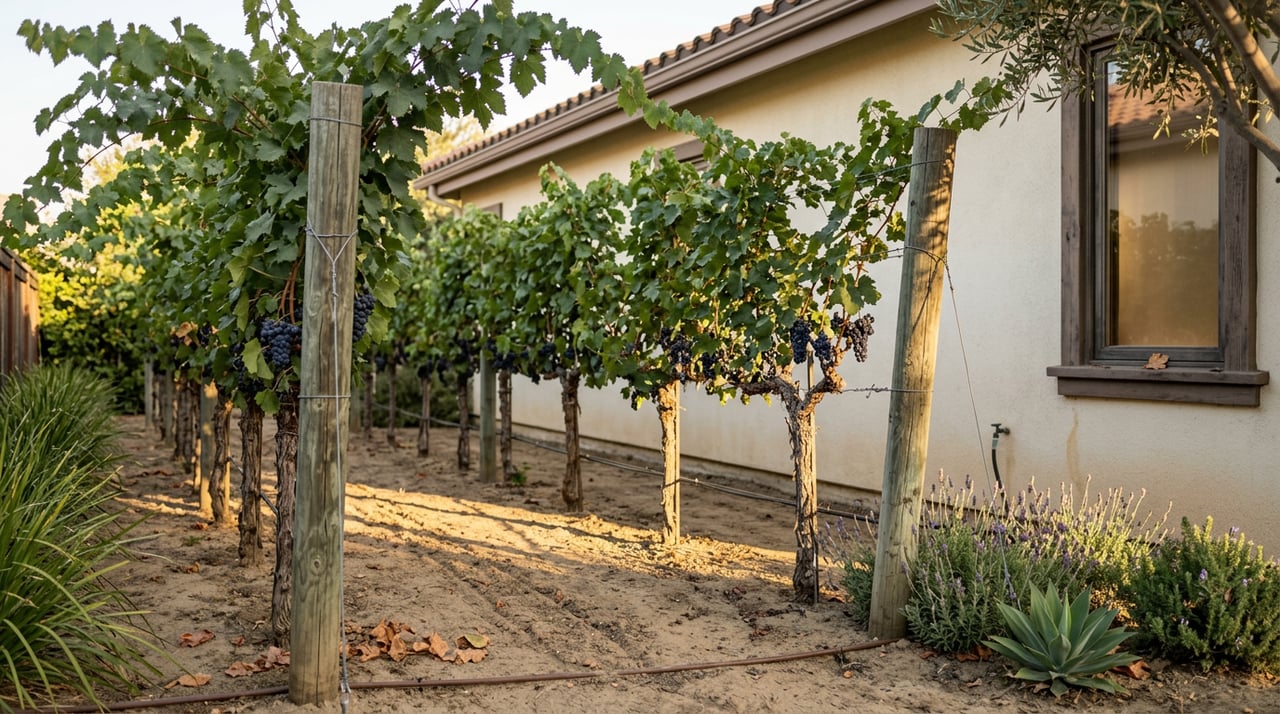
Before Rancho Cucamonga was Rancho Cucamonga, this stretch of San Bernardino County was grapevines. The sandy, well-drained soil and the hot, dry summers that make patio furniture fade a little faster also happen to be close to ideal for growing wine grapes, and by the early twentieth century the valley had built a real wine economy around varieties suited to that heat, Zinfandel, Grenache, Mourvedre, Carignane. In 1995 the federal government made it official, designating the Cucamonga Valley as an approved American Viticultural Area, which means wines made from at least 85 percent locally grown grapes can legally carry "Cucamonga Valley" on the label.
How big was the peak? Accounts differ, and it's worth sitting with the disagreement rather than smoothing it over. One local wine history counts more than 80 wineries operating in the valley during the 1920s. The City of Rancho Cucamonga's own historic preservation file, filed under its record for the Regina Winery property, puts the figure closer to 60. Prohibition wiped out most of them regardless of which count you trust, and postwar suburban development finished the job on whatever survived Prohibition. The two sources argue about the size of what was lost. Neither argues about how little is left.
The Building the City Still Owns
The most surprising fact in this whole story is a piece of real estate trivia most residents have never heard: the City of Rancho Cucamonga owns a working winery.
At 12467 Base Line Road sits a roughly 14-acre property the city's own records call the Regina Winery, originally built as the Ellena Brothers Winery and Regina Grape Product Co. After 1949 the site pivoted almost entirely to producing a nationally distributed wine vinegar under the Regina label, drawing tourists to the valley through the early 1970s. At some point after that run ended, the Filippi family, who had already been growing grapes and making wine elsewhere in the Cucamonga Valley since 1922, took over the lease and began operating it as Joseph Filippi Winery & Vineyards, replanting old vine rows and adding new ones over the following decades.
In 2021, with the long-running lease approaching its end, the city reviewed proposals to redevelop the site, including a concept called Cooper's Row that envisioned converting the historic buildings into a creative arts campus with live-work lofts. By spring 2022 none of the proposals matched what the city and the surrounding community wanted, and the redevelopment effort was shelved. The property sat in limbo for a stretch.
Then, in October 2025, the site quietly reopened under new ownership as d'Ellena Vineyard & Winery, according to Visit California's own Rancho Cucamonga guide. The new operators are pouring flights that mix wines sourced from the Central Coast with bottles still made from grapes grown right there in the valley, Palomino, Grenache, and Old Vine Zinfandel among them, and by their own account they are still in the process of restoring the site's original winemaking character. Current hours run Wednesday through Sunday, one in the afternoon to eight at night.
Most people driving past on Base Line Road have no reason to know any of that. The building looks like a building. It is, in a very literal sense, city-owned wine history that changed hands ten months ago and is still finding its footing.
The city's own preservation file counts this property as one of only five wineries left standing out of the roughly 60 that once anchored the entire valley's economy.
The Winery That Never Stopped
A short drive from Rancho Cucamonga through Mira Loma sits Galleano Winery, founded in the 1930s and still pouring Zinfandel, Sauvignon Blanc, and port from the same historic Cucamonga Valley vine belt, according to Visit California. Where d'Ellena represents a building that changed hands and Rancho de Philo represents a winery that barely operates at all, Galleano is the quiet through-line, a family operation that simply kept working through the decades everyone else's did not.
The three operations are more connected than they look from the outside. For years, Rancho de Philo shipped its Mission grapes to Galleano for fermentation before bringing the wine back to age in its own barrels, a detail that says more about how small this surviving world actually is than any acreage figure could.
Seven Days in November
If d'Ellena is the comeback story, Rancho de Philo Winery is the valley's stubborn holdout. Tucked away at 10050 Wilson Avenue in Alta Loma, near Haven Avenue and Chaffey College, it was founded in 1974 by Philo Biane after he retired as president of Brookside Vineyard Company and came back from a trip to Spain determined to make sherry the traditional way. Rancho de Philo makes exactly one wine, a Triple Cream Sherry produced through the Solera method, a slow, fractional blending process that mixes new wine into barrels holding wine from every prior vintage. By the winery's own account, the current blend traces back to 1963, meaning every bottle sold today carries more than sixty years of continuous aging inside it.
Here is the part that catches longtime residents off guard: Rancho de Philo does not keep regular hours. It opens to the public for roughly one week a year, traditionally the second week of November, selling directly from the property until that year's small batch runs out, sometimes in a matter of days. Philo's daughter, Janine Biane Tibbetts, now runs the winery with her husband Alan, and the next generation has started pouring alongside them, with a family member named Matthew now offering newer table wines like Viognier and Petite Sirah during that same short window. For residents who have lived within a few miles of Wilson Avenue for years without ever making it there, the sale typically lands sometime in November, which puts this year's window roughly three months out from now.
If You're Going
| Winery | Location | When You Can Visit | What's Pouring |
|---|---|---|---|
| d'Ellena Vineyard & Winery | Base Line Road, Rancho Cucamonga | Wednesday through Sunday, 1 to 8 p.m. | Central Coast wines plus Cucamonga Valley Palomino, Grenache, and Old Vine Zinfandel |
| Galleano Winery | Mira Loma, near the Cucamonga Valley border | Regular tasting room hours | Zinfandel, Sauvignon Blanc, port |
| Rancho de Philo | Wilson Avenue, Alta Loma | One week annually, traditionally the second week of November | Solera-aged Triple Cream Sherry, plus newer Viognier and Petite Sirah pours |
Why the Ground Under Rancho Cucamonga Still Matters
None of this changes what Rancho Cucamonga looks like from the street. The subdivisions, the shopping centers, the freeway on-ramps are not going anywhere, and nobody is suggesting the valley is secretly a wine destination on the scale of the ones two hours north or south. What it does change is the assumption that nothing from before the suburbs survived. A city-owned building on Base Line Road just changed hands for the first time in a generation. A family winery in Mira Loma has been quietly pouring since the 1930s without interruption. A sherry maker in Alta Loma still ages wine in barrels that trace back to 1963 and only opens the doors for seven days to sell it.
Knowing details like these, the kind that never show up on a portal listing or a national franchise's website, tends to come from actually living somewhere long enough to notice what's still standing. That's the same instinct that goes into pricing a home accurately or knowing which streets hold value differently than the comps suggest. It comes from paying attention to a place over time, not from running a search.
If you're weighing a move in or around Rancho Cucamonga and want that same kind of grounded, local read applied to your own next step, Gregory Shipp has spent decades watching this valley change from the ground up. Schedule a free consultation whenever you're ready to talk specifics.